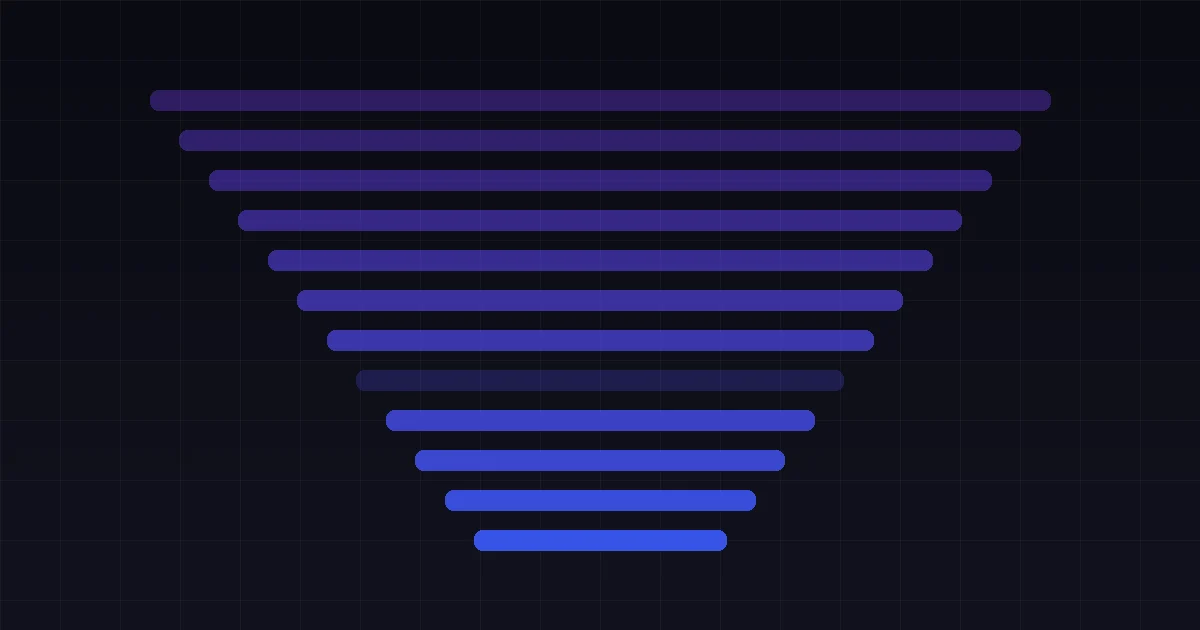
This is the most common problem we get asked about, and it almost always arrives framed as a traffic problem: “we need more visitors.” Usually the site already has visitors. It is losing them.
Before spending anything on more traffic, it is worth finding out what happens to the traffic you already have.
First, check it is actually a conversion problem
Two things quietly look like a conversion problem and are not.
The wrong traffic. If your visitors are arriving from searches with no buying intent, they were never going to enquire. A page ranking for “how to fix a leaking tap” brings people who want to fix it themselves.
Enquiries you never received. Before concluding nobody is contacting you, submit your own form. From a phone. From a different network. Then check spam. Broken forms are far more common than anyone expects, and they fail silently — the visitor sees a thank-you message and you receive nothing.
Then find where people stop
You do not need sophisticated tooling. In your analytics, look at three things:
- Which pages people land on — often not the homepage, which changes what needs fixing.
- Which page they were on when they left. This is your leak.
- How many reach the contact page at all. If almost nobody does, the problem is upstream of the form.
That last distinction matters. If people never reach the contact page, improving the contact page is wasted work.
The four leaks we find most often
1. It is not obvious what happens next
Someone is convinced, and then has to work out what to do. Is it a call? A form? Do they get a quote or a sales pitch? Ambiguity at that exact moment loses people who were ready.
Say what happens: “Tell us what you’re planning and we’ll reply within one business day.” Now the next step has no risk attached to it.
2. The form asks for too much
Every field costs you submissions. Company size, budget dropdowns, “how did you hear about us” — all of it useful to you, none of it useful to the person filling it in.
Ask for what you need to reply. You can ask the rest in that reply, when they are already engaged.
3. The page does not answer the obvious objection
Every business has one question that decides most enquiries. How much does this cost. How long will it take. Do you work with businesses my size.
Sites routinely avoid the question, hoping people will get in touch to ask. Most will not. They will assume the worst answer and leave.
If you cannot give a number, give a range and the reasons it moves. That is far better than silence.
4. It is awkward on a phone
Most of your traffic is on mobile. Check your own site on your own phone, on mobile data rather than office wifi, and try to make an enquiry. Tap targets too small, a form that scrolls badly, a phone number that is not tappable — every one of these quietly costs you enquiries.
Fix one thing at a time
The temptation is to change everything at once. Then something improves and you have no idea which change did it — or worse, two changes cancel out and you conclude none of it works.
Change one thing. Give it enough traffic to mean something. Look at the numbers. Then change the next.
When it really is a traffic problem
Sometimes it is. If a meaningful share of visitors reach the contact page, and the form works, and enquiries are still low in absolute terms — you may simply not have enough of the right people arriving. That is a visibility problem and a different piece of work.
But check the leak first. It is cheaper to keep the visitors you already paid for than to buy more.